09.17.12
:: Latest Developments :: Contaminated Sites
For several years, the New York City Department of Environmental Protection (DEP) has been aerating English Kills, the most polluted section of Newtown Creek, in order to increase oxygen levels to acceptable standards, which is crucial to a water body’s health. Soon, the city plans to expand this process throughout the rest of the creek.
Learn More
09.07.12
:: Latest Developments :: Indian Point
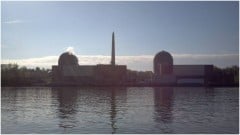
You have until Saturday, Sept. 15 to make a statement for the Nuclear Regulatory Commission to consider during the pivotal hearings that will determine the fate of the Indian Point nuclear reactors.
Learn More
09.05.12
:: Latest Developments :: Preserve River Ecology
Riverkeeper has submitted to New York State on the proposed Tappan Zee Bridge project which point out how the Final Environmental Impact Statement (FEIS) is legally and factually deficient in at least three key areas...
Learn More
08.28.12
:: Latest Developments :: Get Involved
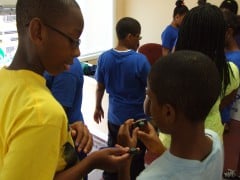
Harlem Children’s Zone Visits Riverkeeper By Conor Strong Riverkeeper had a refreshing visit this summer from sixth and seventh graders at the Harlem Children’s Zone; a school founded by Geoffrey Canada aimed at breaking the cycle of generational poverty for thousands of children and families. The school was recently featured in the award-winning documentary, “Waiting for Superman.” The visit began with a presentation by Dana Gulley, Riverkeeper’s Outreach and Development Coordinator, who explained the history of Riverkeeper. One story that grabbed attention was how Tarrytown’s General Motors plant used to […]
Learn More
08.23.12
:: Latest Developments :: Preserve River Ecology
Riverkeeper is going live on RNN! We’ll share our concerns about the proposed Tappan Zee Bridge replacement project with senior political reporter Andrew Whitman, on the Richard French Live program on Friday, August 24. Issues to be addressed include: The lack of mass transit and financing plans for the Tappan Zee project The seriousness of the project’s impacts on the Hudson River ecosystem Assuring a public role in future decision-making To date, the Governor has not provided plans to deal with these key issues. Too little is known about the […]
Learn More
08.10.12
:: Latest Developments :: Riverkeeper
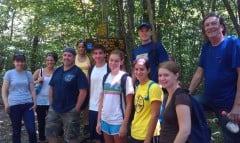
Interns with Watershed Team staff during a hike to Giant Ledge in the Catskills
Riverkeeper’s Summer 2012 internship program is nearing its close! Our eleven summer interns have helped to reinforce the campaigns, projects and outreach events that we are working on during the summer season.
Learn More
08.08.12
:: Latest Developments :: Indian Point
Responding to the June 8 federal appeals court victory by Riverkeeper and our allies, the Nuclear Regulatory Commission voted unanimously this week to hold off on deciding whether to relicense Indian Point for 20 more years until it addresses the risks of storing highly radioactive spent fuel at Indian Point and other nuclear power plants across the country.
Learn More
08.06.12
:: Latest Developments :: Preserve River Ecology
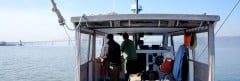
Photo: Rob Friedman
Last week, New York State released its Final Environmental Impact Statement (FEIS) for the proposed new Tappan Zee Bridge project. Since that time, Riverkeeper has reviewed the 1,000+ page document and found serious areas of concern.
Learn More
07.02.12
:: Latest Developments :: Take Action
The Environmental Protection Agency has the chance to make good on its responsibility to stop the slaughter of fish at industrial facilities like Indian Point nuclear power plant, which alone kills 1.2 billion fish and other Hudson River lifeforms every year.
Learn More
06.13.12
:: Latest Developments :: Get Involved
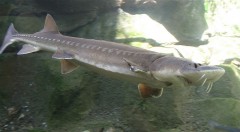
Photo credit: Cacophny
The Atlantic sturgeon, the icon of the Hudson River estuary, was recently declared a federal endangered species. Recently, Riverkeeper has received reports from citizen watchdogs after they discovered Atlantic sturgeon dead. If you find a dead sturgeon, please take down the following information and report it to the Department of Environmental Conservation's Hudson River Fisheries Unit via email at
[email protected].
Learn More