

Key takeaways
- The main safety concern with eating Hudson River fish is contamination from PCB chemicals, which General Electric dumped into the river for 30 years and which cause severe, negative health impacts in people.
- Eating Hudson River fish can be safe in limited amounts, but it depends on where you fish, your age and whether you can become pregnant, and what you catch.
- Higher PCB levels build up in older, predatory fishes.
- PCB concentrations in certain fish species and in different parts of the river are not declining as quickly as expected; Riverkeeper is making sure the Hudson gets a thorough cleanup.
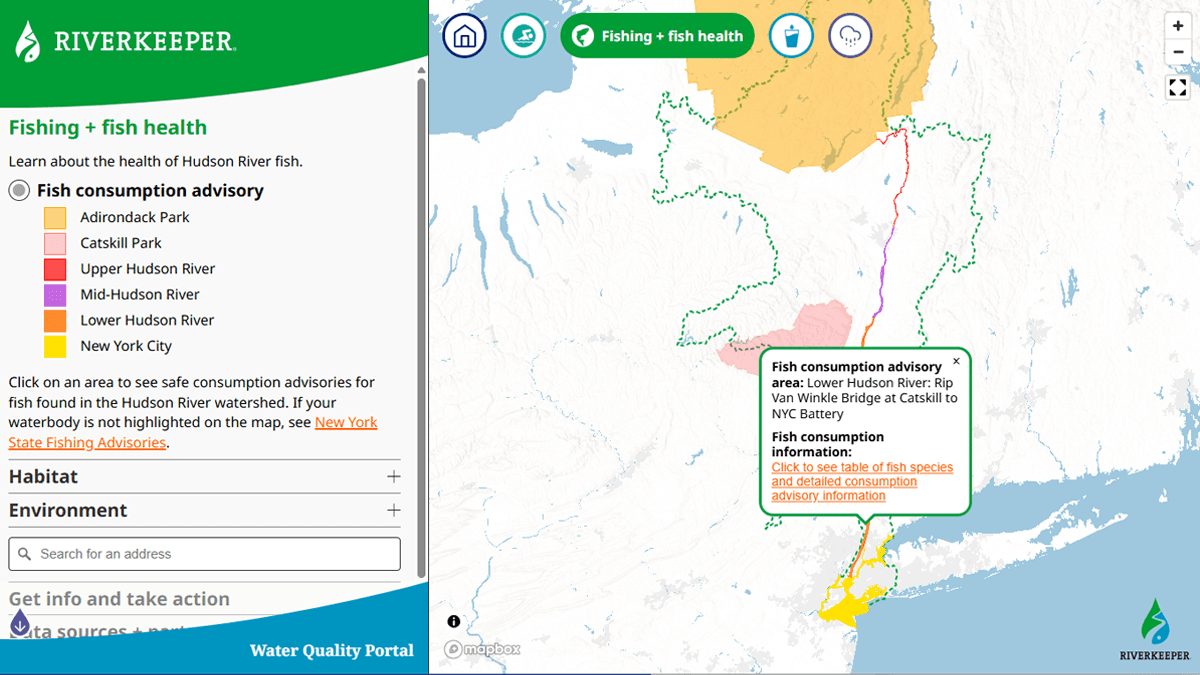
- You can see what fish and how much is safe to eat on Riverkeeper’s interactive Water Quality Portal.
Can I eat fish from the Hudson River?
Are different fishes safer to eat than others?
Can I eat fish from rivers connected to the Hudson?
How do fish get contaminated?
Can I get sick from eating PCBs?
Are Hudson River fish getting safer to eat?
Are there other contaminants in Hudson River fish to worry about?
Water Quality Portal
Use this interactive map to explore water quality throughout the Hudson River watershed with data that Riverkeeper and our partners collect. Dive into the health of the region's fish, when and where it is safe to swim and boat, how clean your drinking water is, and the impacts of climate change.
Related Campaigns

Hudson River PCBs
Without effective action, the health risks and impacts to those living, working, and playing within the 200-mile stretch of the Hudson River PCBs Superfund Site will persist for generations to come

Saving Hudson River fish
Protecting iconic species vital to our local ecosystems

Emerging and unregulated contaminants
Toxic chemicals can harm the health of people, wildlife, aquatic ecosystems